— Answer Engine Optimization
Making Commercial Properties Discoverable in Answer Engine Optimization
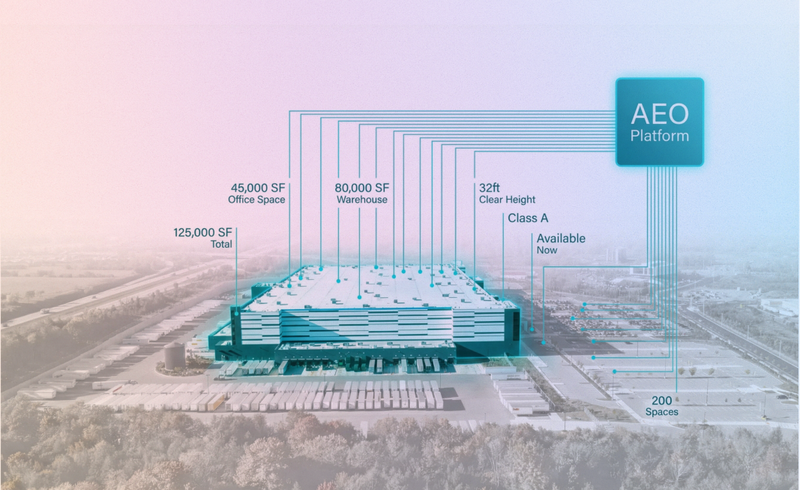
ChatGPT now handles over 37.5 million searches daily. AI Overviews appear in up to 47% of informational queries. And 80% of consumers rely on AI-generated answers for 40% of their searches.
Your commercial properties need to show up when prospects ask ChatGPT, Perplexity, or Gemini about available space in your market. If they don't, you're invisible to a growing segment of serious buyers looking for commercial real estate through Answer Engine Optimization (AEO).
Here's what we know about making CRE properties discoverable to AI answer engines.
Quick Navigation
- AI-Referred Traffic Converts Better
- How AI Answer Engines Actually Work
- Platform Differences for Commercial Real Estate AEO
- What Makes Properties Discoverable
- Structured Data Implementation
- Answer-Ready Content Format
- E-E-A-T Signals
- Documented Results from Commercial Real Estate AEO
- Implementation Roadmap
- The Multi-Platform Requirement
- Common Queries to Optimize For
- Technical Validation
- Frequently Asked Questions
- Next Steps
AI-Referred Traffic Converts Better
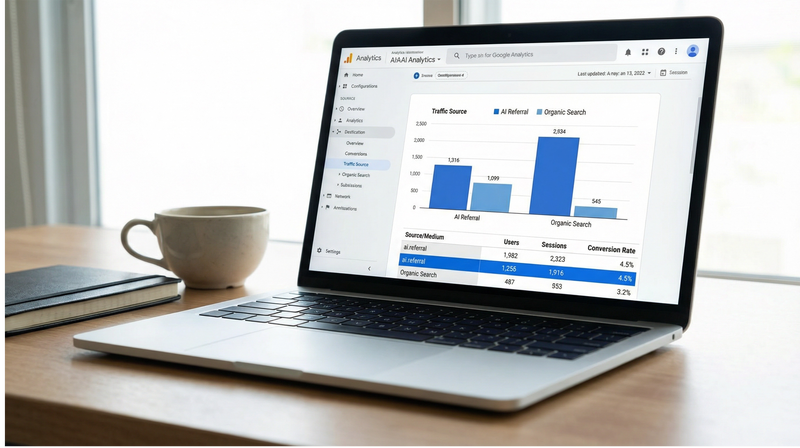
According to Lureon's 2025 analysis, AI-referred visitors convert at 5.53% compared to 3.7% from traditional search. That's a 50% higher conversion rate.
Conductor's 2026 Real Estate Industry AEO Benchmarks report puts it this way: "AI isn't replacing search—it's replacing your website as the first place customers engage with your brand."
Companies implementing AEO strategies report 27% conversion rates from AI-driven traffic to sales qualified leads, with 30% higher time-on-site compared to traditional search visitors.
How AI Answer Engines Actually Work
When someone asks ChatGPT "What office space is available in downtown Toronto under $40 per square foot?", the system doesn't search its training data directly.
Instead, it uses what's called a "query fan-out" mechanism. The AI breaks that question into multiple related sub-queries, searches Google and Bing for each one, and synthesizes the top-ranking results into an answer.
This means traditional SEO still matters. If your properties don't rank in search results, AI engines won't find them to cite.
But ranking alone isn't enough anymore. AI needs to understand what your content means and whether it answers the specific question being asked.
Platform Differences for Commercial Real Estate AEO
ChatGPT is the dominant player. Conductor's 2026 benchmarks analyzed May-September 2025 data and found ChatGPT leading in AI referral traffic across real estate.
Perplexity works differently. It functions as a real-time search engine with transparent citations. It's designed as a research tool that shows sources, which makes it valuable for property discovery.
Gemini integrates with Google's ecosystem. Properties with strong Google Business Profiles and verified business information perform better here.
What Makes Properties Discoverable
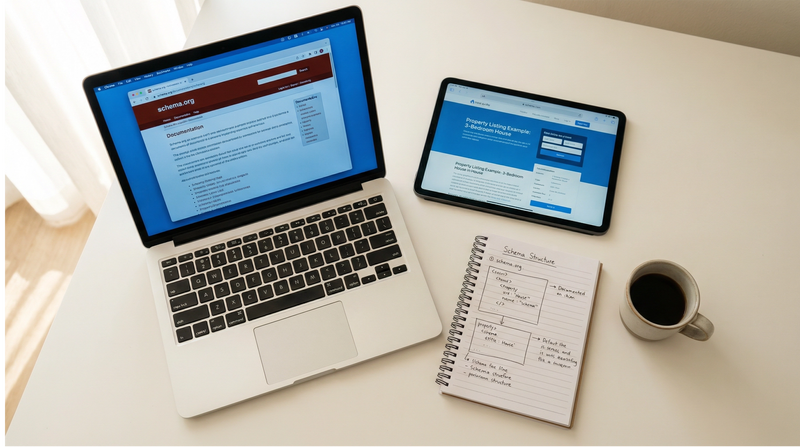
Three technical requirements determine whether AI answer engines can find and cite your commercial properties.
1. Structured Data Implementation
JSON-LD schema markup is the foundation. This is code that wraps around your content and tells AI engines what they're looking at.
For commercial real estate, you need RealEstateListing schema. According to Schema.org's official documentation, this is "a listing that describes one or more real-estate Offers (whose businessFunction is typically to lease out, or to sell)."
The minimum viable implementation looks like this:
But that's just the start. Effective schema includes:
- floorSize with QuantitativeValue and unitCode (SQF for square feet, MTK for square meters)
- Full address with PostalAddress schema including streetAddress, addressLocality, addressRegion, postalCode
- GeoCoordinates with latitude and longitude
- Multiple property images
- amenityFeature using LocationFeatureSpecification for property features
- leaseLength for rental properties
This code goes in a <script type="application/ld+json"> tag in your HTML head or body. Google explicitly recommends JSON-LD over alternatives like Microdata or RDFa.
2. Answer-Ready Content Format
AI engines pull content that directly answers questions. That means restructuring how you write about properties.
Instead of marketing copy, write clear responses to common questions:
- "How much does office space cost per square foot in [your market]?"
- "What amenities are included at [property address]?"
- "What are typical CAM charges for [property type]?"
- "What is the average lease length for commercial properties in [location]?"
The format that works: question as an H2 heading, direct answer in the first 40-60 words, supporting details below.
FAQ schema amplifies this. As PageOptimizer Pro documented in 2025, "The powerful FAQ schema for frequently asked questions is an authoritative question and answer box directly in the search result page."
3. E-E-A-T Signals
E-E-A-T stands for Experience, Expertise, Authoritativeness, and Trustworthiness. These are Google's quality signals that AI engines also use to decide which sources to cite.
For commercial real estate, that means:
Experience signals:
- Years in business
- Transaction history
- Market-specific experience
Expertise signals:
- Professional credentials and certifications
- Industry awards
- Speaking engagements and publications
Authoritativeness signals:
- Citations in industry publications (Bisnow, CoStar, Commercial Observer)
- Backlinks from authoritative real estate sites
- Active presence on industry platforms
Trustworthiness signals:
- Verified business information across all platforms
- Client testimonials and reviews
- Clear contact information and physical location
- Compliance with fair housing and advertising regulations
You can encode some of this in schema:
Documented Results from Commercial Real Estate AEO
ThatWare's 2026 case study with Housiey Real Estate shows what proper AEO implementation delivers:
- Organic traffic increased from 107.6k to 111.1k
- AI overview keywords expanded from 10.9k to 11.9k (+9.2%)
- Engaged sessions across AI platforms rose dramatically:
- Perplexity: +246.34%
- Gemini: +44.44%
- ChatGPT: +19.83%
SmartRent, a property management technology company, restructured their content marketing into help-center pages and integration guides that mirror natural question flow. Results over 12 months:
- 67% increase in organic traffic
- 400% rise in traffic value
- 540% boost in Google AI Overview mentions
AlphaP.tech's analysis concluded: "GEO success comes from translating expertise into accessible, well-structured copy that AI can understand and cite."
A home services franchise optimized over 5,000 blog posts for AI extraction and implemented structured data across all location pages. Result: 458% AI visibility growth across blog content.
Implementation Roadmap

Based on the documented case studies, here's the sequence that works:
Phase 1: Foundation (30-60 days)
Implement JSON-LD schema on your top 20 property listings. Start with RealEstateListing and nested Offer schema.
Add FAQ schema to your main service pages. Structure actual questions prospects ask with direct answers below each.
Verify everything with Google's Rich Results Test.
Phase 2: Content Optimization (60-90 days)
Restructure content with question-based H2 headings. Replace marketing copy with clear answers.
Add what HubSpot calls "answer capsules"—1-2 sentence summaries that provide immediate responses at the top of sections.
Implement E-E-A-T signals: author bios with credentials, case studies, links to industry recognition.
Create llms.txt and llms-full.txt files. These are lightweight files that help AI engines understand your site structure without crawling every page. Host them at your root domain:
Phase 3: Scale and Monitor (Ongoing)
Expand schema coverage to 75%+ of pages. Webflow's 2026 technical AEO guide recommends this as the competitive threshold.
Build topical authority by covering your market comprehensively. AI engines favor sources that demonstrate depth in a specific area.
Test your visibility monthly. Search for queries your prospects actually ask in ChatGPT, Perplexity, and Gemini. Document whether your properties appear in the answers.
Track these metrics:
- AI citation frequency (mentions in answers)
- AI Overview keyword appearances
- Traffic from AI referral sources
- Conversion rates from AI-originated traffic
- Schema coverage percentage
The Multi-Platform Requirement

AI engines don't just pull from your website. They aggregate information from everywhere your properties appear online.
Optimize5's 2026 guide to AI and local search found that "AI tools rely mostly on sources businesses control" including:
- Google Business Profile
- Third-party platforms (LoopNet, CoStar, Crexi for commercial)
- Directory listings with consistent NAP (Name, Address, Phone)
- Industry publication mentions
Keep all of these fresh with current information. AI engines cross-reference multiple sources. Inconsistent data reduces your citation probability.
Common Queries to Optimize For
Based on documented research from Galaxy.ai and Adventures in CRE, prospects ask AI engines these types of questions about commercial properties:
Market and location:
- "What are the best areas for [property type] investment in [city]?"
- "Current commercial real estate trends in [market]"
- "Average commercial rent in [location]"
- "Office space availability in [neighborhood]"
Property-specific:
- "How much does [property type] cost per square foot in [area]?"
- "What amenities are included in [building/property]?"
- "Is [property address] suitable for [business type]?"
- "What is the average lease length for commercial properties in [market]?"
Financial and investment:
- "How to finance commercial real estate purchases"
- "What are typical CAM charges for [property type]?"
- "ROI calculation for commercial property in [location]"
Operational and leasing:
- "What types of commercial leases are available?"
- "What should I look for when screening commercial tenants?"
- "How to negotiate commercial lease terms"
- "What are typical build-out allowances for [property type]?"
Create content that directly answers these questions for your specific market and properties.
Technical Validation
Before you publish schema markup, validate it:
- Google's Rich Results Test - Checks JSON-LD syntax and required properties
- Schema.org Validator - Validates against official specifications
- Google Search Console - Monitors how Google crawls and indexes your schema
Common validation errors to watch for:
- Missing required properties (name, description, url)
- Incorrect data types (string vs. number vs. object)
- Malformed URLs or dates
- Nested schema with missing context
Frequently Asked Questions
What is Answer Engine Optimization?
Answer Engine Optimization is the practice of optimizing your content and technical infrastructure to appear in AI-generated answers from ChatGPT, Perplexity, Gemini, and other AI answer engines. It involves structured data implementation, answer-ready content formatting, and E-E-A-T signals.
How do AI answer engines find commercial properties?
AI answer engines use a "query fan-out" mechanism where they break down user questions into multiple sub-queries, search Google and Bing for results, and synthesize the top-ranking pages into answers. This means traditional SEO still matters, but AI also needs to understand your content structure through schema markup.
What structured data do I need for commercial real estate?
The minimum viable implementation includes RealEstateListing schema with nested Offer schema. Effective implementations also include floorSize with QuantitativeValue, full PostalAddress schema, GeoCoordinates, multiple property images, amenityFeature using LocationFeatureSpecification, and leaseLength for rental properties.
What conversion rates can I expect from AEO?
According to Lureon's 2025 analysis, AI-referred visitors convert at 5.53% compared to 3.7% from traditional search—a 50% higher conversion rate. Companies implementing AEO strategies report 27% conversion rates from AI-driven traffic to sales qualified leads.
How long does AEO implementation take?
A phased approach typically takes 120-180 days: Phase 1 (Foundation) 30-60 days for schema implementation on top 20 properties, Phase 2 (Content Optimization) 60-90 days for restructuring content and adding E-E-A-T signals, Phase 3 (Scale and Monitor) ongoing expansion to 75%+ of pages.
What E-E-A-T signals matter for commercial real estate?
E-E-A-T stands for Experience, Expertise, Authoritativeness, and Trustworthiness. For CRE: Experience signals include years in business and transaction history; Expertise signals include credentials and industry awards; Authoritativeness signals include citations in industry publications; Trustworthiness signals include verified business information and client testimonials.
Should I optimize for ChatGPT, Perplexity, or Gemini?
ChatGPT is the dominant player for commercial real estate traffic. However, you should optimize for all three: ChatGPT for volume, Perplexity for research-oriented prospects who value citations, and Gemini for properties with strong Google Business Profiles.
How do I validate my structured data?
Use Google's Rich Results Test to check JSON-LD syntax and required properties, Schema.org Validator to validate against official specifications, and Google Search Console to monitor how Google crawls and indexes your schema markup.
Next Steps
Answer Engine Optimization isn't optional anymore for commercial real estate. It's the next frontier of property discoverability.
Start with Phase 1: Implement JSON-LD schema on your top 20 properties, add FAQ schema to service pages, and validate everything with Google's Rich Results Test.
Then move to Phase 2: Restructure your content with question-based headings, add E-E-A-T signals, and create llms.txt files.
Finally, scale to Phase 3: Expand schema coverage, build topical authority, and monitor your AI visibility monthly.
The commercial real estate market is shifting. Properties that show up in ChatGPT, Perplexity, and Gemini will capture the most serious buyers. Properties that don't will become increasingly invisible.
The time to act is now.