— Partner Early Access
Storyblok Launches FlowMotion: Native n8n Workflow Automation Is Here (And We Got In Early)
Most enterprise content teams don't have a production problem — they have a coordination problem. Storyblok's FlowMotion is a native workflow automation layer built directly into the CMS, powered by n8n's enterprise engine. Dotfusion was selected as one of the first agency partners to get early access. This post covers what FlowMotion is, how it differs from a webhook, and what we're building in a four-part video series.
Most enterprise content teams don't have a production problem. They have a coordination problem.
Content sits finished in a shared drive while someone chases down a sign-off in Slack. The product team updates the spec after the CMS is already live. Legal wants another pass. The French translation gets done, but nobody re-imports it. A new campaign launches on the website but the CRM still has old messaging. You've got 14 Zapier zaps and none of them talk to each other.
According to Smartsheet, more than 40% of workers spend at least a quarter of their workweek on manual, repetitive tasks. The problem isn't that content teams are slow. It's that the systems they're working in weren't built to coordinate.
Storyblok just launched something that addresses this directly. FlowMotion is their new native workflow automation layer, built directly into the CMS and powered by n8n's enterprise engine — and it's the most significant thing they've added to the platform in years.
Dotfusion was selected as one of the first agency partners to get early access. We've had it running for several weeks now. This post covers what FlowMotion actually is, why it matters for enterprise content operations, and what we're building with it. It also introduces a four-part video series where we show everything, hands-on, in a real Storyblok environment.
📑 Table of Contents
- What Is Storyblok FlowMotion?
- How Is This Different From a Webhook?
- What Enterprise Teams Can Actually Do With It
- Why This Matters for Discoverability
- How Agentic Content Operations Fits In
- What We're Building: The FlowMotion Video Series
- Subscribe and Stay Close
- Frequently Asked Questions
Update: March 31, 2026 — FlowMotion Is Now Generally Available
FlowMotion launched publicly today. Here's what changed between early access and general availability.
*Confirmed availability:
FlowMotion is now a purchasable enterprise add-on for Storyblok Enterprise customers. No self-serve tier. No published pricing. Sales-led.
New proprietary research data released at launch
(200 marketers and 200 developers at global brands):
75% of marketers lose more than 6 hours per week to manual content coordination
88% of organizations take more than a week to launch a new automation workflow
84% of marketers say governance visibility would increase their trust in AI to handle content
That third stat is the one worth sitting with. Governance is the unlock for AI at scale. It is also exactly what FlowMotion's approval gate architecture addresses directly.
MCP trigger support confirmed:
At launch, Storyblok CEO Dominik Angerer specifically named MCP (Model Context Protocol) support in the official announcement:
"Teams can design workflows visually and trigger them via MCP."
That means AI agents can now initiate FlowMotion workflows directly. The agentic layer is now live, not theoretical.
First confirmed enterprise customer at GA:
Systemair — Christopher Bergdahl, Product Owner Web:
"Within just a few weeks, we were able to turn a complex, manual content synchronization challenge into a fully automated workflow. Previously, this required a mix of manual updates and custom scripts across different systems and markets."
The post below was written during Dotfusion's early access period. All of it still holds. The data and customer proof above are new as of today.
What Is Storyblok FlowMotion?
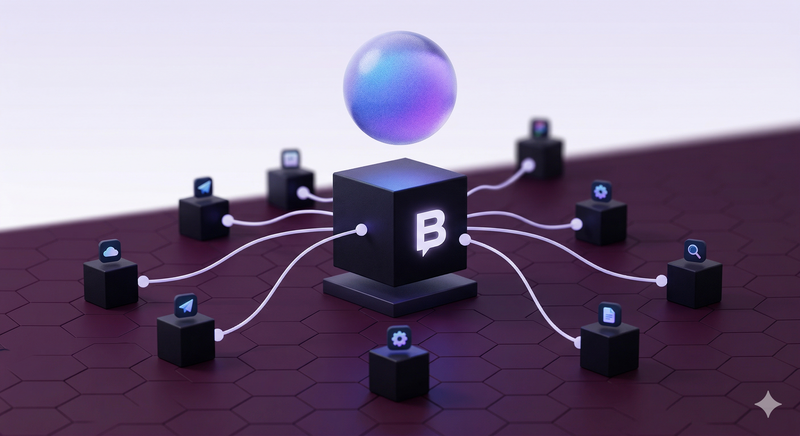
FlowMotion is Storyblok's native automation and orchestration layer, built directly into the CMS and powered by n8n's enterprise workflow engine.
That distinction matters. It's not a plugin. It's not an external webhook setup. It's not a third-party tool you connect to Storyblok via API. FlowMotion is embedded in the Storyblok interface itself, and it runs on n8n under the hood, which means it carries over 500 pre-built integrations: Slack, Jira, HubSpot, Shopify, Lokalise, OpenAI, Anthropic, and hundreds more.
The core mechanic is straightforward: any content event in Storyblok can trigger a coordinated, multi-step workflow across your entire digital ecosystem. Create a story. Publish a page. Upload an asset. Schedule a campaign. Any of those events can be the starting point for an automated sequence that reaches across every system your content touches.
Storyblok CEO Dominik Angerer put the problem plainly on the FlowMotion landing page: "When 88% of organizations need more than a week to launch a new automation workflow, and over a third need more than a month, something's off." FlowMotion is the answer to that.
For enterprise teams that have been waiting for headless CMS workflow automation built into their stack rather than layered on top of it, this is it. It's currently available as an enterprise add-on. Dotfusion has early access as a Storyblok partner agency. Our broader history building on the platform is covered in our Dotfusion and Storyblok foundation piece if you want the context.
How Is This Different From a Webhook?

The most common question we've seen asked publicly about FlowMotion, and it's the right one. The answer comes down to the difference between automation and orchestration.
A webhook fires once and forgets. Something happens in System A, a notification gets sent to System B. That's it. If System B is down, the message is lost. There's no branching logic, no error handling, no conditional path, no human approval gate. A webhook can trigger a single action. It can't coordinate a sequence.
FlowMotion doesn't just send a signal. It manages a multi-step workflow where each step knows about the others. It handles conditional branching ("if this content is flagged for legal review, route it here; otherwise, route it there"), stateful execution (the workflow remembers where it is, even across systems), error handling (if Step 3 fails, retry or escalate), and human-in-the-loop handoffs through a dedicated "Send and Wait for Response" node.
That last capability is critical for enterprise governance. Legal approval. Regional review. Compliance sign-off. Any step that genuinely requires a human decision can be built into the workflow as a gate, not bolted on afterward.
At enterprise scale, scattered webhooks break constantly. A field name changes in Storyblok and every downstream webhook script that referenced it stops working. A translation vendor misses a step and nobody knows until the French version is three weeks out of sync. There's no visibility, no retry logic, no accountability. FlowMotion replaces that with an orchestration layer that's visible, debuggable, and controlled from one place.
What Enterprise Teams Can Actually Do With It
Four use cases show where it actually earns its keep.
Translation and localization at scale
A story gets created in Storyblok. FlowMotion sends it to Lokalise for translation, waits for the response, syncs the translated version back into Storyblok, notifies the regional content manager in Slack, and auto-publishes on approval. No emails. No Word docs. No manual re-entry. The English and French versions stay linked at the data model level and both publish on schedule.
For Canadian enterprises managing bilingual content, this alone is significant.
AI content enrichment inside the pipeline
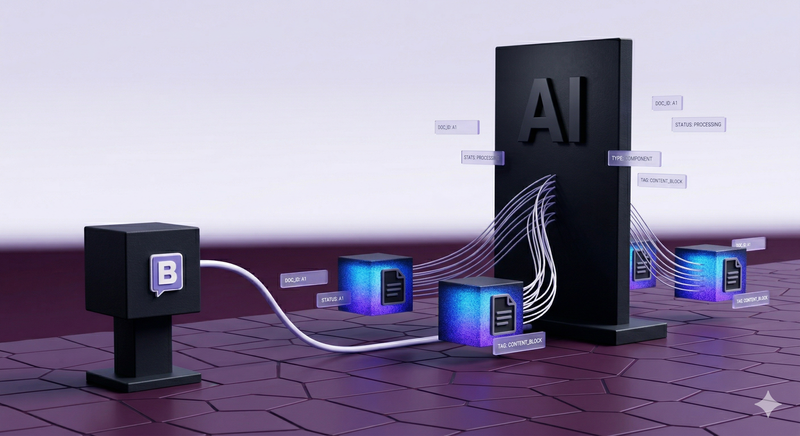
New content enters Storyblok. FlowMotion routes it through an AI node, which generates structured metadata, tags, SEO fields, or a summary based on the content body, then writes the results directly back to the correct fields in Storyblok. The enrichment happens automatically, in the workflow, before the content ever reaches a human reviewer.
This is what content operations automation looks like in practice: AI doing structured, bounded work inside a controlled pipeline, not as a standalone tool someone has to prompt manually.
Legal and compliance approval routing
A content change triggers a review workflow. FlowMotion routes the change to the compliance team with a "Send and Wait for Response" gate. The previous version gets archived. If legal approves, the update publishes and the risk team gets notified. If legal flags an issue, the workflow routes back to the content author with the specific feedback attached. No email thread required. No version confusion. Audit trail maintained automatically.
Cross-system launch orchestration
One content publish event in Storyblok triggers a coordinated sequence: the website goes live, the CRM record updates, the support content syncs, the sales team gets a Slack notification, and a Jira ticket closes. The launch is a single action, not a checklist five people are tracking separately.
Only 33% of marketers have automated content management, according to Statista's 2024 research. That means most teams are still coordinating these steps manually. FlowMotion is what the other 67% should be looking at.
Why This Matters for Discoverability

Most workflow automation tools stop at efficiency. FlowMotion has a second-order effect that's worth naming.
AI answer engines, including ChatGPT, Perplexity, and Gemini, rely on content that's accurate, current, and structurally consistent. When your CMS publishes content but your CRM still has an old product description, when your website says one thing and your support docs say another, when translated versions drift out of sync, AI systems pick that up. They cite the version they can parse most reliably. Often that's not yours.
FlowMotion keeps content operationally healthy across every system it touches. When the source content updates, every connected system updates with it. Metadata stays accurate. Translations stay in sync. Related content gets flagged for review when the parent piece changes.
Content operations is infrastructure for discoverability. A headless CMS built API-first is already structured for AI engines. FlowMotion keeps that structure intact across its full lifecycle. That's the connection our Answer Engine Optimization strategy work keeps coming back to: you can build a technically perfect piece of content and still lose visibility if it goes stale or gets out of sync after publish.
McKinsey's November 2025 research found that AI has the potential to automate 57% of US work hours with today's technology. The organizations that capture that productivity aren't the ones generating the most content. They're the ones with the operational infrastructure to keep it accurate and coordinated at scale.
How Agentic Content Operations Fits In

FlowMotion is more than a workflow tool. It's the infrastructure that makes agentic content operations viable at enterprise scale.
In most content workflows, AI assists a human: someone prompts it, reviews the output, pastes it somewhere, and moves on. The human is the coordinator. In agentic content operations, AI is a participant inside an automated pipeline. It receives structured inputs, performs a defined task, returns structured outputs, and the workflow continues without human intervention at that step.
FlowMotion provides the pipeline. Storyblok provides the structured content model. n8n provides the AI node integrations. Together, they give enterprise teams the ability to build content workflows where AI does real operational work, not just creative assistance, within guardrails that governance teams can actually control.
The productivity paradox matters here. Research consistently finds that AI tools increase team workload when they're adopted without operational frameworks — more generation, more coordination overhead, more inconsistency to manage. FlowMotion attacks the coordination overhead directly. The result isn't just faster content. It's content that moves through systems without requiring a human at every handoff.
What We're Building: The FlowMotion Video Series
We've been building inside FlowMotion since early access. Not reading about it. Not watching demos. Building workflows in real Storyblok environments, testing edge cases, finding what breaks, and working out the configurations that hold up under enterprise conditions.
We're publishing everything as a four-part video series. Each video is hands-on. No slides. No theory. Real workflows, in real environments, built live.
Not sure what agentic content operations actually means? Start here first:
What Is Agentic Content Operations? Storyblok + FlowMotion + n8n
Published March 28, 2026 — a short intro to the concept before diving into the build series.
Phase 1: Your First FlowMotion Workflow
We build a Storyblok management trigger connected to a Slack notification. Simple, functional, and a clear introduction to how FlowMotion's node-based builder actually works. If you haven't built a workflow before, start here.
Watch Phase 1: Storyblok FlowMotion — First Look at n8n Built Into Your CMS
Published March 29, 2026
Phase 2: Content Governance at Scale
Multi-market content sync. Translation triggers. Approval routing. Version management. This is where FlowMotion starts earning its enterprise credentials. We build the workflows that turn hours of manual coordination into automated chains.
Phase 3: AI Inside the Workflow
We embed AI directly into the content pipeline: metadata generation, structured field enrichment, content quality checks, and channel-specific transformations. Built live, including the parts that require more configuration than the docs suggest.
Phase 4: Full Agentic Content Operations
The complete pipeline. A Storyblok content event through AI enrichment, cross-system sync, approval orchestration, and multi-channel publish. This is what enterprise-grade agentic content ops looks like when the pieces are assembled correctly.
Each video stands on its own. Follow the full series or jump to the phase that matches where your team is right now.
Subscribe and Stay Close
Subscribe to the Dotfusion YouTube channel and follow us on LinkedIn so you don't miss a phase.
We've been building on Storyblok for enterprise clients including Sunwing, Pizza Nova, and others across travel, food service, and commercial real estate. FlowMotion changes what those implementations can do. The series is built to show that practically, not just describe it.
If you want to talk through what FlowMotion could look like in your specific content stack, we're easy to reach.
Further Reading
- Why Dotfusion and Storyblok Work — The Value Case
- Multi-Agent AI and Enterprise Digital Transformation
- Answer Engine Optimization: The Next Frontier in Digital Strategy
- The Future of the Enterprise Web: Headless, Composable, AI-Driven
Dotfusion is a Toronto-based digital agency and Certified B Corporation with 27 years of enterprise headless CMS experience. We use our business as a force for good.
Frequently Asked Questions
What is Storyblok FlowMotion?
FlowMotion is Storyblok's native automation and orchestration layer, built directly into the CMS and powered by n8n's enterprise workflow engine.
That distinction matters. It's not a plugin. It's not an external webhook setup. It's not a third-party tool you connect to Storyblok via API. FlowMotion is embedded in the Storyblok interface itself, and it runs on n8n under the hood, which means it carries over 500 pre-built integrations: Slack, Jira, HubSpot, Shopify, Lokalise, OpenAI, Anthropic, and hundreds more.
The core mechanic is straightforward: any content event in Storyblok can trigger a coordinated, multi-step workflow across your entire digital ecosystem. Create a story. Publish a page. Upload an asset. Schedule a campaign. Any of those events can be the starting point for an automated sequence that reaches across every system your content touches.
Storyblok CEO Dominik Angerer put the problem plainly on the FlowMotion landing page: "When 88% of organizations need more than a week to launch a new automation workflow, and over a third need more than a month, something's off." FlowMotion is the answer to that.
For enterprise teams that have been waiting for headless CMS workflow automation built into their stack rather than layered on top of it, this is it. It's now available as an enterprise add-on at GA. Dotfusion has partner access as a Storyblok partner agency. Our broader history building on the platform is covered in our Dotfusion and Storyblok foundation piece if you want the context.
How is FlowMotion different from a webhook?
The most common question we've seen asked publicly about FlowMotion, and it's the right one. The answer comes down to the difference between automation and orchestration.
A webhook fires once and forgets. Something happens in System A, a notification gets sent to System B. That's it. If System B is down, the message is lost. There's no branching logic, no error handling, no conditional path, no human approval gate. A webhook can trigger a single action. It can't coordinate a sequence.
FlowMotion doesn't just send a signal. It manages a multi-step workflow where each step knows about the others. It handles conditional branching ("if this content is flagged for legal review, route it here; otherwise, route it there"), stateful execution (the workflow remembers where it is, even across systems), error handling (if Step 3 fails, retry or escalate), and human-in-the-loop handoffs through a dedicated "Send and Wait for Response" node.
That last capability is critical for enterprise governance. Legal approval. Regional review. Compliance sign-off. Any step that genuinely requires a human decision can be built into the workflow as a gate, not bolted on afterward.
At enterprise scale, scattered webhooks break constantly. A field name changes in Storyblok and every downstream webhook script that referenced it stops working. A translation vendor misses a step and nobody knows until the French version is three weeks out of sync. There's no visibility, no retry logic, no accountability. FlowMotion replaces that with an orchestration layer that's visible, debuggable, and controlled from one place.
What Storyblok plan do you need to use FlowMotion?
FlowMotion is currently available as an enterprise add-on. It's not included in Storyblok's Free, Growth, or Growth Plus tiers. Contact Storyblok or a certified Storyblok partner agency to discuss enterprise access.
Does FlowMotion work with AI tools like OpenAI and Anthropic?
Yes. FlowMotion includes native AI nodes for OpenAI, Anthropic, and self-hosted LLMs. These let you embed AI directly into content workflows — generating metadata, enriching structured fields, running quality checks — with the AI operating as a participant inside the pipeline rather than a standalone tool someone has to prompt manually.
Does FlowMotion work with AI tools like OpenAI and Anthropic?
Yes. FlowMotion includes native AI nodes for OpenAI, Anthropic, and self-hosted LLMs. These let you embed AI directly into content workflows — generating metadata, enriching structured fields, running quality checks — with the AI operating as a participant inside the pipeline rather than a standalone tool someone has to prompt manually.
Can AI agents trigger FlowMotion workflows directly?
Yes, as of the March 31, 2026 general availability launch. Storyblok confirmed MCP (Model Context Protocol) trigger support, meaning AI agents can initiate FlowMotion workflows without requiring a human or a manual Storyblok content event as the starting point. This is the capability that makes truly agentic content operations viable: an AI agent detects a condition, decides a workflow is needed, and triggers it autonomously within the governance guardrails you have defined.