— AI Solutions
Part 1 - Google's Universal Commerce Protocol: What CMOs Need to Know
On January 11, 2026, Google made a significant bet on the future of commerce: shopping will increasingly happen inside conversational AI experiences, not just on traditional websites.
The Universal Commerce Protocol (UCP)—announced at the National Retail Federation's annual conference—is Google's open standard for "agentic commerce." Co-developed with Shopify, Etsy, Wayfair, Target, and Walmart, and endorsed by payment giants like Visa, Mastercard, Stripe, and PayPal, UCP enables end-to-end purchasing directly within Google's AI Mode and the Gemini app.
For CMOs managing eCommerce platforms, this represents a fundamental shift in how customers discover and purchase products. Your commerce architecture—and your marketing strategy—needs to adapt.
What Is Universal Commerce Protocol?

UCP establishes a common language for AI agents and commerce systems to work together across the entire shopping journey: product discovery, checkout, payment processing, and post-purchase support.
Instead of building custom integrations for every AI platform that wants to enable shopping (ChatGPT, Gemini, Perplexity, Claude), retailers can implement UCP once and connect to any agent that supports the standard.
The first implementation launched in Google's AI Mode (conversational search) and Gemini app. When users ask Gemini to help them find products—"I need comfortable workout leggings in a floral print"—they can now complete purchases without leaving the conversation. Payment happens through Google Wallet or PayPal, with delivery details pre-filled.
Why This Time Is Different
Voice commerce failed. Google Shopping Actions never gained traction. So why should CMOs care about UCP?
Visual context matters. Unlike voice-only shopping (Amazon Alexa circa 2017), AI Mode and Gemini show product images, details, reviews, and comparisons. Users can see what they're buying while conversing naturally.
AI adoption is accelerating. Google Search processes billions of queries daily, and AI Mode is becoming the default experience for complex searches. Gemini has 230+ million active users. This isn't a niche device—it's embedded in the primary way consumers already search.
The checkout friction problem is solved. Payment credentials, shipping addresses, and purchase history are already stored. One-click buying inside AI removes the abandonment risk of redirecting to external sites.
Competition is forcing standardization. OpenAI launched its Agentic Commerce Protocol (ACP) in September 2025, powering purchases inside ChatGPT. Microsoft is integrating commerce into Copilot. Retailers need interoperability standards, not N×N platform-specific integrations.
The Strategic Implications for eCommerce Brands
For CMOs, UCP represents three interconnected challenges:
1. Commerce Architecture Readiness
UCP requires API-first, headless commerce infrastructure. If your eCommerce stack is built on a monolithic platform (Magento 1.x, legacy SAP Hybris, tightly coupled WordPress/WooCommerce), you'll struggle to integrate.
The question: Can your platform expose product catalogs, pricing, inventory, checkout logic, and order management through standardized APIs?
Modern composable commerce platforms (Shopify, BigCommerce, commercetools, Salesforce Commerce Cloud with headless architecture) are UCP-ready or moving quickly to support it. Legacy platforms require significant refactoring—or replacement.
2. Product Discovery in Conversational Contexts
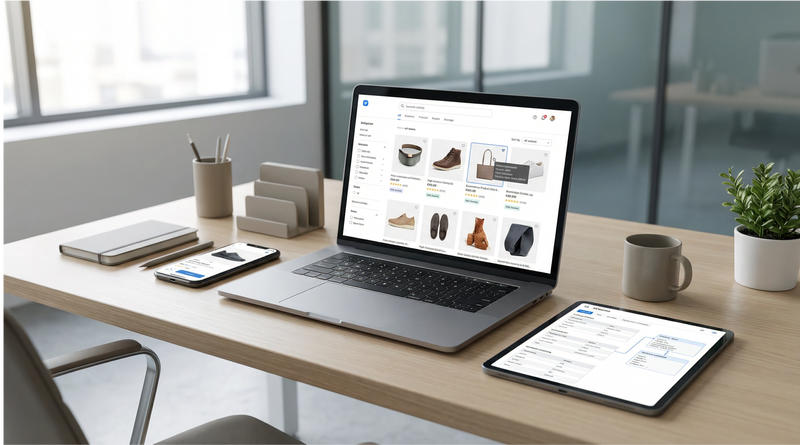
Traditional SEO optimizes for keyword-based search. Agentic commerce requires AI-readable product data: structured schemas, detailed attributes, high-quality images, inventory signals, and rich metadata.
Your product feeds need to be optimized for AI interpretation, not just human browsing. This is where Answer Engine Optimization (AEO) becomes critical—more on that in Part 3 of this series.
3. Attribution and Measurement Complexity
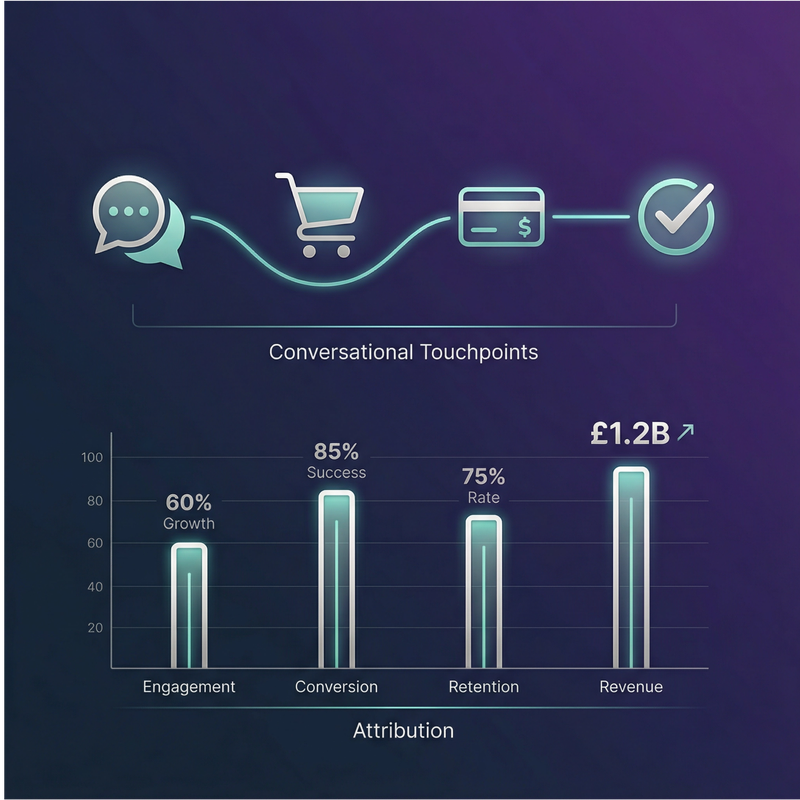
When purchases happen inside Gemini or AI Mode, traditional web analytics break. Google Analytics won't capture the full journey. Your attribution models need to account for conversational touchpoints.
The operational question: How do you track ROI when the "storefront" is a chat interface, not your website?
Who Benefits Most?
Direct-to-consumer brands and retailers with modern platforms gain the most immediate advantage:
-
Shopify merchants can enable UCP-powered selling in Google AI Mode with minimal configuration
-
Brands with strong product differentiation (design-forward goods, curated collections) benefit from AI-driven discovery
-
High-consideration purchases (furniture, electronics, athletic wear) where conversational guidance adds value
-
Brands with loyalty programs and repeat buyers who already have saved payment methods
Marketplaces (Amazon, eBay) face disruption. If consumers can purchase from individual brands directly through AI without visiting a marketplace, intermediary platforms lose leverage.
What This Means for B2B Commerce
While the initial UCP rollout targets consumer retail, the protocol is designed to scale beyond B2C. Google explicitly built UCP to support:
-
Multi-item carts with complex pricing rules
-
Account-based purchasing with approval workflows
-
Subscription and recurring billing models
-
Custom fulfillment and delivery scheduling
B2B eCommerce leaders should prepare for agentic procurement: enterprise buyers using AI agents to research, compare, and purchase industrial supplies, software licenses, or professional services.
The Timeline: When Should CMOs Act?
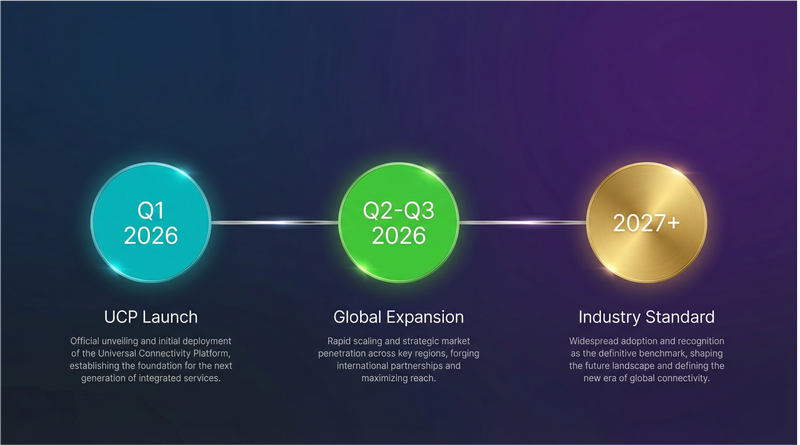
Now (Q1 2026): UCP is live for select US retailers in Google AI Mode and Gemini. If you're on Shopify, BigCommerce, or similar platforms, you can join the waitlist.
Q2-Q3 2026: Expansion to global markets, additional features (loyalty rewards, multi-item carts, post-purchase tracking), and broader platform support.
2027+: OpenAI's ACP and Google's UCP likely converge into industry-wide standards. Every major AI platform will support agentic commerce. Brands without API-first architectures will be locked out.
The Composable Architecture Advantage
This is where platform modernization pays dividends. Enterprises that migrated from monolithic CMS and eCommerce platforms (Adobe Experience Manager, Sitecore, Magento) to headless, composable architectures are positioned to adopt UCP with minimal friction.
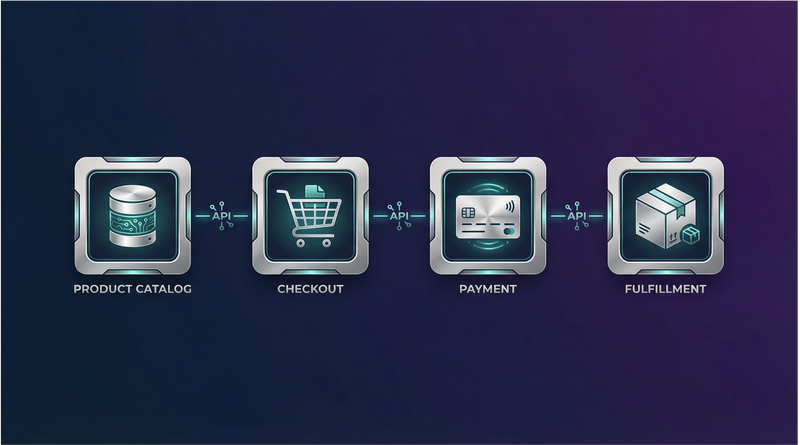
Composable commerce separates:
-
Product catalog (headless CMS or PIM)
-
Checkout and cart logic (API-first commerce platform)
-
Payment processing (modular payment providers)
-
Fulfillment (order management systems)
Each component exposes APIs. UCP connects to these APIs without requiring platform replacement.
If your eCommerce stack is tightly coupled—where the product catalog, checkout experience, and payment handling are all embedded in a single monolithic application—UCP integration becomes a major engineering project.
Practical Next Steps for CMOs
-
Audit your commerce architecture. Can your platform expose real-time inventory, pricing, and checkout through APIs? If not, what's the migration path?
-
Evaluate platform partners. Is your eCommerce platform roadmap aligned with UCP? Shopify, BigCommerce, and Commerce (parent of BigCommerce and Feedonomics) have already announced support.
-
Assess product data quality. Are your product feeds structured for AI discovery? Do you have high-quality images, detailed attributes, and semantic metadata?
-
Plan for attribution complexity. How will you measure conversions that happen outside your website? Work with your analytics team to define new KPIs.
-
Monitor competitive moves. Which competitors are adopting UCP? How are they positioning products in AI search results?
What's Next
In Part 2, we'll dig into the technical architecture of UCP: how it works under the hood, integration requirements, payment handling, and the relationship between UCP, Agent Payments Protocol (AP2), and Model Context Protocol (MCP).
In Part 3, we'll address the marketing implications: how SEO and Answer Engine Optimization (AEO) change when discovery happens in conversational AI, and how CMOs should rethink demand generation strategy.
About Dotfusion
Dotfusion specializes in enterprise digital transformation from legacy platforms to headless, composable architectures. We've helped organizations like Oxford Properties, Brookfield, Mitsubishi Electric, and Moneris modernize their commerce and content platforms to support future-ready experiences—including agentic commerce.
If your eCommerce platform isn't ready for UCP and agentic shopping, let's talk about modernization.